
The oral presentation makes almost everyone nervous — and that’s completely normal. But here’s the part most students miss: it’s also one of the most controllable SACs in VCE English. Your assessors aren’t grading how charismatic you are. They’re grading your thinking: the strength of your argument, your understanding of audience and purpose, and how clearly you can explain the choices you made.
In this guide, we walk through the whole task in order — choosing your issue, researching it, sharpening your contention, writing and delivering the speech, and finally writing a Statement of Intention that justifies every decision.
What your assessors are actually looking for
Before you write a single word, it helps to know what’s being marked. Across the oral presentation and its written explanation, you’re being assessed on:
- the quality of your ideas;
- the effectiveness of your argument;
- your understanding of audience and purpose; and
- your ability to explain and justify your language choices in writing.
Notice what’s missing from that list: “confidence” and “charisma”. This task rewards planning, strategy and awareness. A nervous speaker with a sharp, well-researched argument will outscore a confident speaker with a flimsy one.
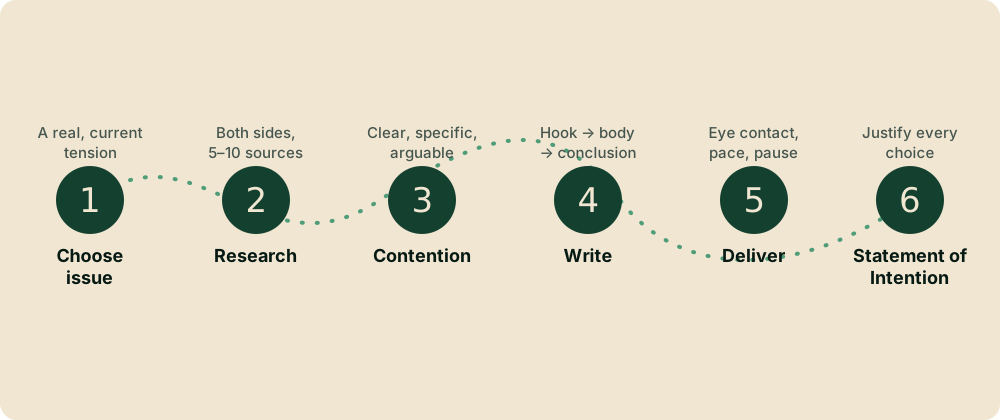
Step 1: Choose an issue with real tension
Your topic is the single most important decision you’ll make. A strong issue must have at least two genuine sides. If nobody disagrees, there’s nothing to persuade anyone of.
Take the question of whether Australia should introduce a sugar tax. It works beautifully because there are compelling arguments for and against — which gives you room to acknowledge the other side and then take it apart.
Avoid issues that are universally accepted or can’t reasonably be challenged. “Racism is bad” or “climate change exists” leave you with nowhere to go.
Make sure it meets the task requirements
Your issue typically needs to have appeared in the Australian media within a set timeframe — commonly since 1 September of the previous year. Check your task sheet and check your dates carefully; this is non-negotiable.
Then narrow it down. Broad themes like climate change, mental health or technology are too vague to argue well. Anchor your speech to a specific proposal, event or policy instead:
| Too broad | Specific and arguable |
|---|---|
| Climate change | Should Australian schools let students miss class to attend climate strikes? |
| Mental health | Should schools replace one exam period with a mandatory wellbeing week? |
| Technology | Should phones be banned in all Victorian secondary schools? |
Specificity shows your assessors that you understand how public debate actually works.
Pick something your audience can follow
Your audience is usually teachers and fellow VCE students, so clarity matters. Avoid topics that lean on technical jargon unless you’re confident you can explain them simply. Issues that feel relevant, relatable and current land best — if your audience already cares, you’re halfway there.
Stuck for ideas?
Browse the ABC News archive and the opinion sections of major outlets for a week. And if you’re still torn, choose the issue you genuinely care about. Controlled passion almost always translates into stronger delivery.
Step 2: Research before you write
Once your topic is locked in, resist the urge to start writing. Strong speeches are built on strong research.
Start with major Australian news outlets — The Age, the Herald Sun, ABC News and The Australian — then broaden into commentary and discussion from sources like The Conversation, Q+A and Insight.
Read both sides of the debate. Your assessors expect you to show awareness of opposing views, even when you ultimately reject them.
As you read, collect:
Aim to read and annotate five to ten articles before you start drafting. But don’t just stitch other people’s arguments together — originality is rewarded. Your job is to transform your research into your own persuasive framework.
Step 3: Craft a contention that can take a hit
Your contention is the backbone of the whole presentation. It needs to be clear, specific and arguable.
Weak
- Climate change is real.
- Hate speech is wrong.
Strong
Australia must allow pill testing at music festivals and treat drug use as a health issue rather than a criminal offence.
The strong example takes a firm, defensible position, invites rebuttal and sets you up for a genuinely sophisticated argument.
Step 4: Write the speech

The introduction: hook, context, direction
Your introduction has a lot to do in a short space, so be deliberate:
- Hook your audience with a rhetorical question, a short anecdote, a striking statistic or a mini-story.
- Establish urgency — why does this issue matter now, not in theory?
- Bring the audience with you using inclusive language (“we”, “our”, “us”).
- State your contention clearly.
- Preview your arguments so your audience knows where you’re headed.
If you’re adopting a persona — a student, teacher, doctor or community member — introduce it early and sustain it. A lawyer speaks differently from a teenager, and your assessors will notice if your voice slips.
Vary your sentence length on purpose. Short sentences land hard. Longer ones give you space to explain nuance. And define any key terms early so nobody gets lost later.
Body paragraphs: build the case
Give each body paragraph one main argument. Signal it clearly at the start and reinforce it at the end.
The most persuasive paragraphs blend two kinds of appeal:
- Logic — evidence, expert opinion, statistics.
- Emotion — connotation, anecdote, rhetorical questions.
Let your techniques feel natural rather than bolted on. Borrow ideas from the articles you researched, but adapt them to your own voice.
Word choice does a lot of quiet persuasive work. Describing graffiti as “street art” rather than “vandalism” completely changes how your audience sees the issue before you’ve made a single argument.
Don’t dodge the other side
Acknowledge the strongest counter-argument respectfully — then dismantle it. Rebuttal shows confidence and awareness, two qualities assessors reward heavily.
The conclusion: leave a lasting impression
Your conclusion is not the place for new ideas. Instead:
- restate your contention;
- briefly reinforce your key arguments; and
- remind your audience why this issue affects them.
Then end memorably. A final rhetorical question, statistic or brief anecdote helps your speech linger after you sit down.
Step 5: Delivery that actually makes a difference
Delivery can lift a good speech into a great one. Focus on the things that move the needle:
- Eye contact — sweep different parts of the room rather than locking onto one person.
- Cue cards up — hold them high enough that you aren’t constantly looking down.
- Stay grounded — stand still; pacing and swaying distract.
- Pace and pause — slow down slightly and pause after key ideas. Clarity beats speed every time.
- Vary your tone deliberately to signal shifts in emotion and emphasis.
- Keep props simple — your speech should be the star, not your slides.
Most importantly, practise out loud: to friends, family, a mirror or your phone camera. Aim to know your speech well enough that you’re speaking it, not reading it.
Step 6: The Statement of Intention (written explanation)
The written explanation is a significant chunk of your mark — often around a quarter, depending on your school’s task — yet many students rush it. Don’t.
This is your chance to justify your choices clearly and strategically. Word limits are tight (commonly around 400–500 words), so every sentence has to earn its place. Work through these six elements:
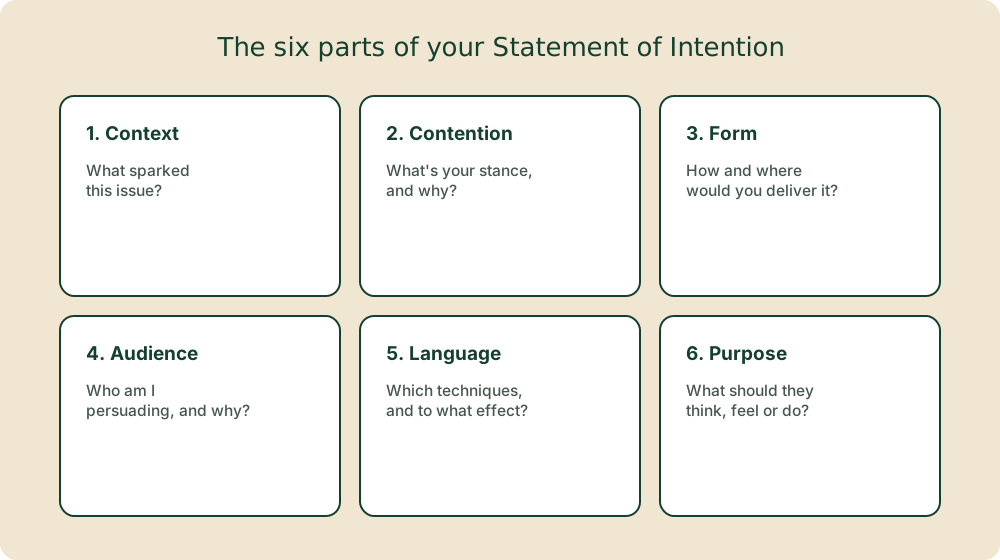
- Context — briefly outline the issue and the event(s) that sparked media attention.
- Contention — state your position and why you chose it.
- Form — explain where and how the speech would be delivered, and justify any persona.
- Audience — identify your target audience and explain why they’re the right people to persuade.
- Language — discuss your language style and key persuasive techniques, and how each is designed to influence your audience.
- Purpose — spell out what you want your audience to think, feel or do after hearing you.
This section rewards clarity, precision and reflection — not storytelling.
Key takeaways
- Choose a specific, current, genuinely debated issue your audience can follow.
- Research both sides across five to ten quality sources before drafting.
- Write a contention that is clear, specific and arguable.
- Blend logic and emotion, and always rebut the strongest opposing view.
- Rehearse out loud until you’re speaking, not reading.
- Treat the Statement of Intention as a marks opportunity, not an afterthought.
Final word
The oral presentation isn’t about being the loudest or most confident person in the room. It’s about strategy, awareness and control. Understand your audience, justify your choices and present a clear, well-researched argument, and you’ll be working at a high level — nerves and all.
Book a session
Want feedback on your contention or a practice run of your speech before SAC day? The English Kit can help you sharpen your argument and your Statement of Intention.
Book a session →Quick answers
How do I choose a good topic for my VCE English oral presentation?
Choose a specific, current issue with genuine disagreement on both sides, that has appeared in the Australian media within the timeframe your task sheet sets, and that your audience of teachers and students can follow without specialist knowledge.
What should a Statement of Intention include?
Cover context, contention, form, audience, language and purpose — briefly explaining each choice you made and why it suits your audience and aim.
Can I still do well in the oral if I’m a nervous speaker?
Yes. Most of the marks reward the quality of your argument, your awareness of audience and purpose, and how well you justify your choices. Preparation and rehearsal matter far more than natural charisma.


