
Summer’s finally here — time for a break, a few too many episodes of your favourite show and some sunshine. But if you’re aiming high in Year 12 English, it’s also the perfect window to get a head start.
Think of the holidays like pre-season training: a short, steady sprint now puts you ahead of the pack when the year kicks off. In this article, we’ll show you how to set yourself up, then how to use the break wisely across all three areas of study — Text Response, Crafting Texts and Analysing Argument — with a quick checklist for each.
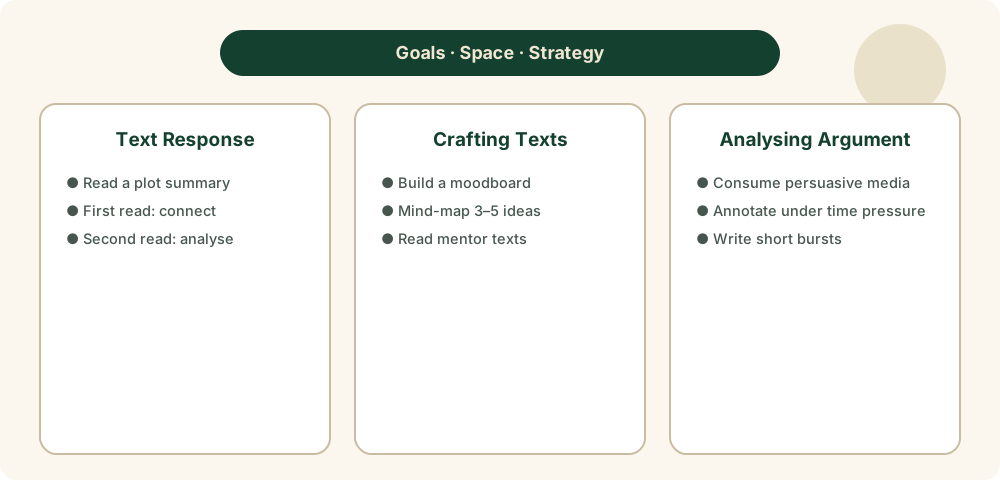
1. Get your goals, space and strategy in order
Set a concrete target. Whether you’re aiming for a 40+ or the full 50, a clear number makes everything feel real — and far more motivating.
Organise your system. Try out study methods or apps, clear your workspace, and set up your folders (physical and digital). A little organisation now saves hours of friction later.
Review your Year 11 feedback. Those teacher comments are gold. Find your Achilles’ heel — rambling introductions? Shallow analysis? A limited vocabulary? — and make fixing it a holiday project.
Write your goal down
Put your target study score and your top weakness on a sticky note above your desk. Seeing both every day keeps your summer study focused on what will actually move your mark.
2. Text Response: build a strong foundation
Your first text will stay with you all year, so starting early is a smart move.
- Read your first text twice if the text is dense — read a plot summary first. It helps you follow along without getting bogged down.
- First read (or watch) for enjoyment. Note the scenes that hit you emotionally — and ask why they landed.
- Second read for analysis. Collect quotes, track symbols and themes, and ask deeper questions (“What if this event never happened?”).
- Explore secondary reading. Reviews, articles and discussions expose you to new interpretations — and give you metalanguage to borrow.
Text Response holiday checklist
3. Crafting Texts: give your creative writing a head start
If your creative piece is going to be your “child” for the year, start nurturing it now.
- Brainstorm what you care about. What message do you want to share?
- Build a moodboard or playlist of images and music that spark ideas.
- Read widely, especially mentor texts connected to your framework. What works for you? What doesn’t?

Crafting Texts holiday checklist
4. Analysing Argument: persuasion and structure
Not everyone loves argument analysis — but it’s structured and predictable, which means it’s something you can dominate with practice.
- Consume persuasive media: opinion pieces, speeches and podcasts. For each, identify the contention, the key devices and the structure.
- Annotate under time pressure: set a 10–15 minute timer, underline persuasive language and note tone and shifts.
- Write short, timed bursts: an introduction here, a single paragraph there. Quality over quantity.
Analysing Argument holiday checklist
5. A final word for the break
You’re not just preparing for Year 12 — you’re positioning yourself to thrive in it. It’s normal to feel the pressure, but a clear plan, steady effort and a positive mindset go a long way. Rest properly, too: a recharged brain learns faster.
Key takeaways
- Set a specific study score goal and identify your biggest weakness.
- Organise your study space and system before term starts.
- Read your first text twice — once for enjoyment, once for analysis.
- Start brainstorming and reading for your Crafting Texts piece.
- Practise short, timed argument analysis tasks.
Start Year 12 ahead
Feeling stuck on your text, essay skills or creative piece? The English Kit’s one-on-one tutoring can help you turn this summer’s head start into a strong Year 12.
Start Year 12 ahead →Quick answers
What should I do over the summer before Year 12 English?
Set a clear study score goal, organise your study system, review your Year 11 feedback, read your first text (twice if you can), start brainstorming your Crafting Texts ideas and practise annotating opinion pieces.
Should I read my Year 12 English texts over the summer?
Yes — at least your first text. Read once for enjoyment and a second time analytically, collecting quotes, symbols and themes as you go.
How much study should I do over the summer holidays?
A little, consistently. Short, focused sessions a few times a week build a real head start without sacrificing the rest you need before a demanding year.


